
How to Prepare Your Roof for Hurricane Season
Hurricane season runs June 1 through November 30 in the Atlantic and Gulf basins. The roofs that come through it intact aren't the ones built strongest in absolute terms — they're the ones whose minor weaknesses were caught and addressed in April and May. A loose flashing detail or a clogged gutter that's a $200 fix in spring becomes a $15,000 insurance claim after the first Cat 2 makes landfall.
Here is the pre-hurricane-season roof checklist Quest Exteriors runs with our Texas, Louisiana, Georgia, and Gulf-and-Atlantic-coast clients — what to inspect, what to fix preemptively, what to document for insurance, and how to weigh an upgrade to impact-resistant materials before the next storm cycle.
Schedule a pre-season inspection
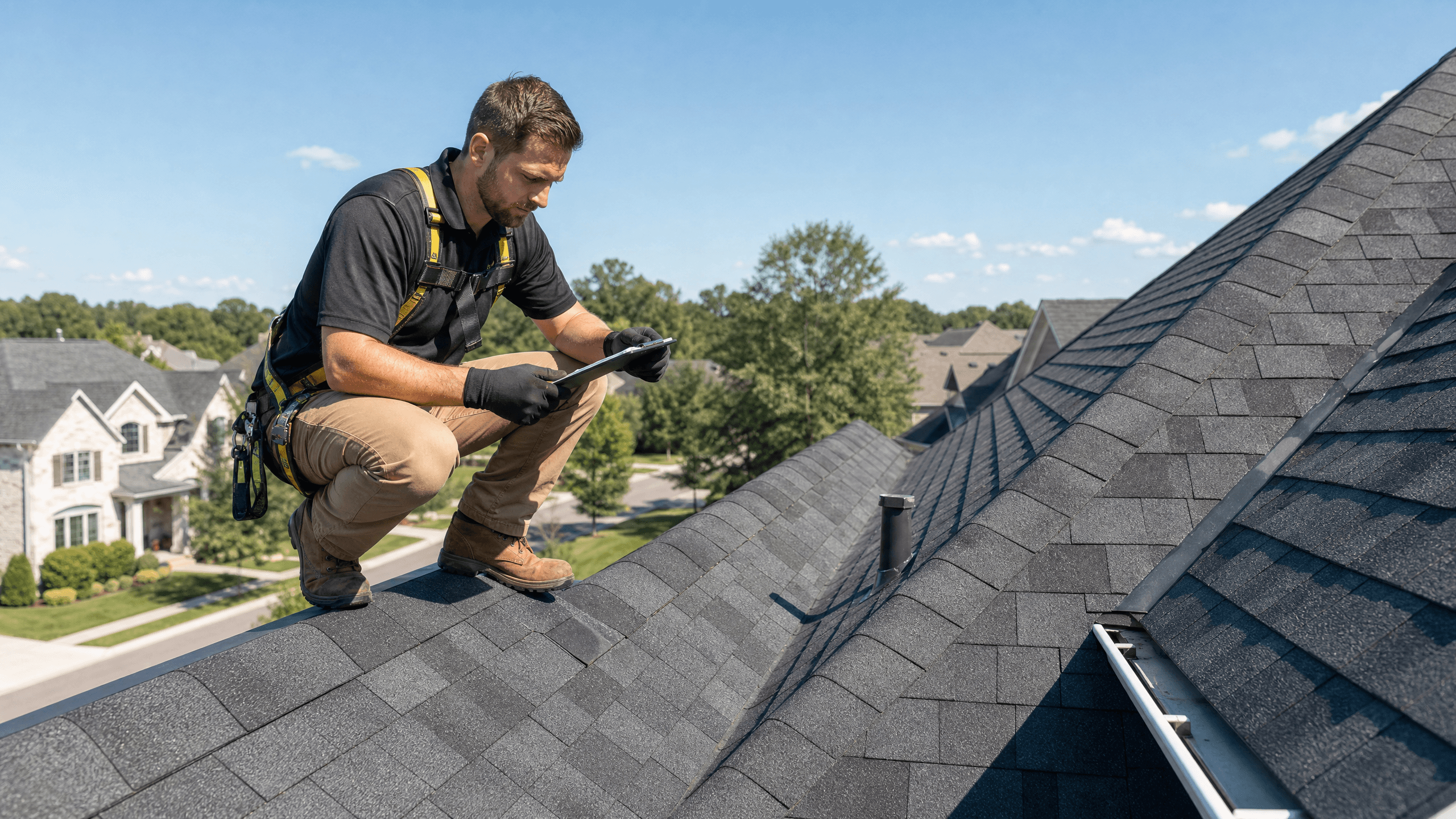
Book a professional inspection between April 1 and May 15 if possible. This timing gives you:
- Documentation of pre-season condition that supports any future insurance claim
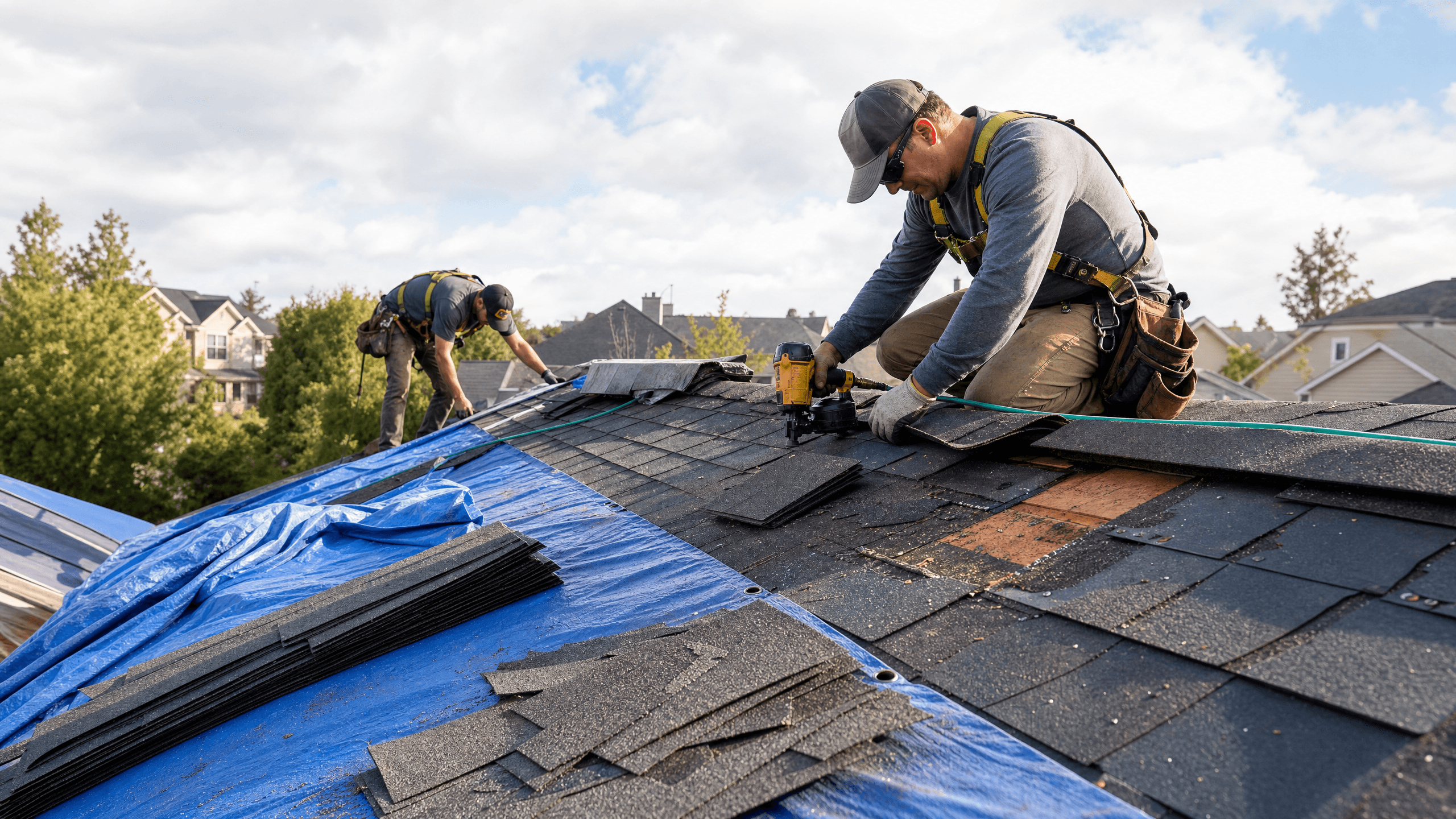
- Time to address minor repairs (loose flashing, failing pipe boots, missing fasteners) before storms arrive
- Access to contractor calendars before they fill up with post-storm emergency work
- Material lead-time buffer if you decide to upgrade to impact-resistant or wind-rated systems
Quest Exteriors provides pre-season inspections at no charge across our service area. The written report becomes your baseline documentation for any subsequent storm-damage claim — and the carrier will appreciate the documented pre-storm condition.
Secure loose shingles and flashing
The most common pre-storm vulnerabilities are visible during a proper inspection:
- Lifted or partially separated shingle tabs — often along the field after years of thermal cycling
- Failing pipe boot collars — UV-degraded rubber that cracks and lets water in around plumbing stacks
- Loose drip edge or step flashing — common after a few seasons of expansion-and-contraction stress
- Cracked sealant at chimneys and skylights — sealants have a 5-10 year service life and need periodic replacement
- Missing fasteners or exposed nail heads — typical on aging roofs
These are low-cost fixes that prevent high-cost storm losses. We handle them as part of our roofing service.
Clear gutters and downspouts
Clogged gutters are one of the highest-leverage hurricane vulnerabilities — and one of the cheapest to fix. Heavy hurricane rain (often 6-12 inches in a single event) overwhelms clogged systems, backs up onto the fascia and into the soffit, and pushes water under the shingle line where it shouldn't be. The result is rotted decking, ceiling damage, and a claim conversation that's harder to win because the carrier can argue the damage is maintenance-related.
Get your gutters professionally cleared before June 1. Quest's gutter service includes pre-season clearing, drainage testing, and seal verification at every connection.
Trim overhanging branches
Branches within 6-10 feet of the roof should be trimmed back before hurricane season. The risks:
- Wind whip damage — branches scraping the roof surface during high wind events strip granules and tear flashings
- Falling-limb impact — major limbs falling onto the roof during a storm cause structural damage and immediate leak paths
- Debris accumulation — leaves and small branches blowing onto the roof clog valleys and pull moisture against the surface
A certified arborist handles the tree work; we handle the roof side. The two trades coordinate well as a pre-season pair.
Check attic ventilation and roof penetrations
Hurricane-force winds find every weak penetration in a roof system. The pre-season check includes:
- Ridge vent condition — properly fastened, no exposed seams, intact baffles
- Soffit vent integrity — clear of paint or debris that blocks intake airflow
- Pipe boot collars — flexible, intact, no UV cracking
- Chimney flashing — sealed, intact, properly counter-flashed
- Skylight perimeter seals — intact, no signs of separation
Each penetration is a potential failure point in a Cat 2+ wind event. Documented intact condition pre-season + documented damage post-storm = a strong insurance claim.
Document current condition for insurance
The single most useful pre-season action a homeowner can take is document the roof's current condition with date-stamped photos and a written professional inspection report. Why this matters:
- Post-storm, carriers sometimes argue damage was pre-existing — documented pre-season condition shuts down that argument
- Documentation supports faster claim processing because the adjuster has a baseline to compare against
- Pre-existing minor issues you documented and didn't repair can still get covered if the storm worsened them
Our broader Insurance Claims Help page covers the full claim process; pre-season documentation is the foundation under all of it.
The QuestShield maintenance program
QuestShield is Quest Exteriors' year-round maintenance program — scheduled inspections, minor-repair handling, storm-response priority scheduling, and documentation that keeps your roof at its warranty potential. For coastal and storm-prone properties, QuestShield provides:
- Pre-season inspections with written reports formatted for insurance documentation
- Storm-response priority — Quest customers move to the front of the queue after major events
- Same-day emergency tarping when access permits
- Maintenance records suitable for warranty and insurance documentation
- Preferred pricing on minor repairs and emergency response
Should you upgrade to impact-resistant materials?
If your current roof is approaching end of life and you live in a hurricane-prone area, the next replacement is the time to consider upgraded materials:
- Class 4 impact-rated shingles — better hail and wind-debris performance, plus typical insurance discounts of 15-30% on the roof portion of your premium
- Six-nail high-wind fastening patterns — exceeds the four-nail minimum that meets bare code, dramatically improves uplift resistance
- Full ice-and-water shield coverage — typically required by code only at eaves and valleys, but full-deck coverage is the upgrade that pays for itself the first time a windstorm rips a shingle field
- Standing-seam metal — wind-uplift ratings that exceed even high-wind coastal zone requirements, plus 40-70 year service life
Upgrade decisions are personal — depend on your budget, ownership horizon, and the carrier's specific discount schedule. Book a free assessment and we'll walk through the numbers for your specific property.
Manufacturer resources
If you're weighing a wind- and impact-rated upgrade, the manufacturers publish the wind-rating and impact-class detail behind each shingle line:
- GAF — high-wind-rated and Class 4 impact-resistant shingle systems plus certified-installer warranties.
- Owens Corning Roofing — impact-rated shingle lines and the fastening specs tied to their wind warranties.
- CertainTeed — Class 4 impact-rated shingle specifications and high-wind installation requirements.