How to Know If Your Roof Has Hail Damage: A Complete Guide
Severe hail is one of the most damaging — and most underestimated — weather events a roof faces. The spring and summer storm cycles that move across the country's hail-belt corridor every year regularly drop hail that's large enough to damage roofs — and small enough that homeowners often don't realize they have a problem until the first leak appears months later. By then, the granule loss has accelerated, the underlayment has been exposed, and the insurance window for filing a claim may have closed.
Below: how to spot hail damage at the slope level, how to document it for an insurance claim, and what to do (and avoid) in the 24-72 hours after a hail event. The advice comes from 30+ years of combined roofing and insurance-industry experience across our 23-state service area.
What hail damage actually looks like on a roof
Most hail damage doesn't look like the dramatic photos people picture. The damage is usually subtle, distributed across slopes, and only fully visible when you walk the roof — which is why insurance carriers send adjusters up rather than relying on photos from the ground.
Asphalt shingle damage
On architectural asphalt shingles — the most common residential roofing material in North America — hail typically shows up as round, dark bruises between 1/4 inch and 1 inch in diameter. The dark color is the asphalt mat showing through where the protective granules have been knocked loose. Severe impacts can leave the mat itself bruised (soft to the touch) or fractured underneath. Lighter impacts may show only as granule-loss patches without visible bruising.
Other signs include lifted shingle tabs, exposed nail heads where shingles have been displaced, granules accumulating in valleys and gutters in unusual quantities, and a generally weathered look across the roof that wasn't there before the storm.
Metal and stone-coated steel roof damage
Metal panels show hail damage as dents — sometimes deep, more often shallow and circular. Dents alone may be cosmetic on a standing-seam metal roof, but they often coincide with paint or coating damage that affects long-term corrosion resistance. Stone-coated steel shingles can lose surface granules in patterns similar to asphalt, plus develop small dents at the impact points.
Other visible damage indicators
Hail damage rarely affects only the roof. The full damage picture usually includes:
- Aluminum gutters and downspouts with visible dents (an easy ground-level indicator)
- Gutter screens or guards punched, dented, or torn from impact
- Air conditioning condenser fins flattened against the unit (a strong corroborating signal of significant hail)
- Vehicle dents in driveways or on the street — particularly useful for documenting timing and severity
- Vinyl siding or fence panels cracked, dimpled, or torn at impact points
- Soft metals on the roof (vent caps, plumbing flashing, chimney flashing) with visible dents
- Window and door trim with paint damage or impact marks
Signs you can see from the ground
We don't recommend climbing on your roof — it's slippery, structurally compromised after damage, and insurance carriers don't accept homeowner roof photos as primary evidence anyway. But you can identify likely hail damage from ground level by checking:
- Gutter dents at multiple locations around the perimeter
- Granules accumulating in downspout splash blocks (look like coarse black sand)
- Dents on aluminum patio furniture, mailboxes, or other soft-metal items in the yard
- Air conditioner fins on outdoor condenser units (easy to spot)
- Damage on neighboring properties — hail typically tracks in streaks, so if neighbors had damage, you likely did too
- Recent vehicle damage parked outside during the storm
When to call a professional
Call a roofing contractor for a free hail damage inspection if any of the following apply after a severe storm in your area:
- Hail reached 1 inch or larger (golf-ball-sized or bigger) anywhere in your area
- Your neighborhood had a documented severe storm event in the last 12 months
- You see dents on your gutters, AC unit, or vehicles
- Neighbors are getting roof replacements
- Your roof is more than 10 years old (older roofs are more vulnerable and worth checking proactively)
- You see any interior signs of water intrusion — staining, peeling paint, or musty smells
Most reputable roofing contractors — including Quest Exteriors — offer free inspections after major storm events. There's no good reason to wait if you suspect damage. Insurance policies typically require "prompt" notification of a loss, and delayed claims face higher denial rates because the carrier can argue the damage worsened during the delay.
The Quest Exteriors inspection process
An honest hail damage inspection isn't a sales call disguised as a service. Here's what a professional inspection should include:
- Full perimeter walk documenting gutters, downspouts, siding, AC units, and other low-elevation indicators
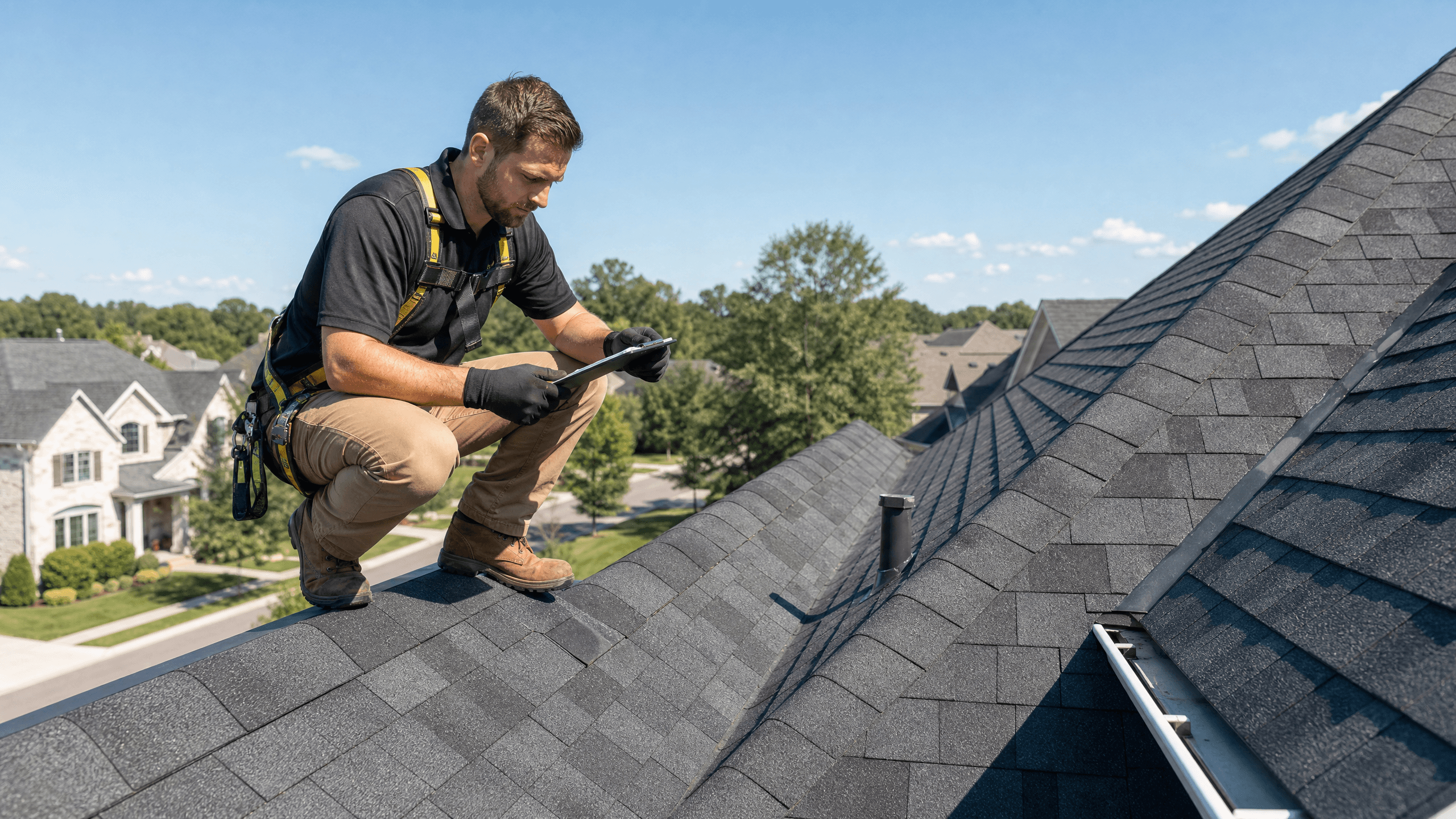
- Roof access with proper safety equipment — every slope walked and photographed individually
- Slope-by-slope photo documentation with reference markers showing impact density and severity
- Soft-metal photos of vent caps, plumbing flashings, and chimney flashings
- Interior attic inspection when accessible — looking for water intrusion, daylight at penetrations, and ventilation issues
- Written report delivered same-day or within 24 hours, with photos, slope diagrams, and a recommendation
A good inspector will tell you honestly whether you have a claim-worthy event or not. "You don't have damage" is a valid answer and saves you premium increases later — far better than a contractor who pressures you into filing a claim that doesn't qualify.
Insurance considerations after a hail event
If the inspection reveals legitimate hail damage, the next decision is whether and how to file an insurance claim. This decision deserves its own careful thought — we cover it in depth in Should You File an Insurance Claim for Roof Damage?. The short version: not every documented damage event is worth a claim, but most genuine hail damage is, especially when paired with damage to gutters, siding, and HVAC units.
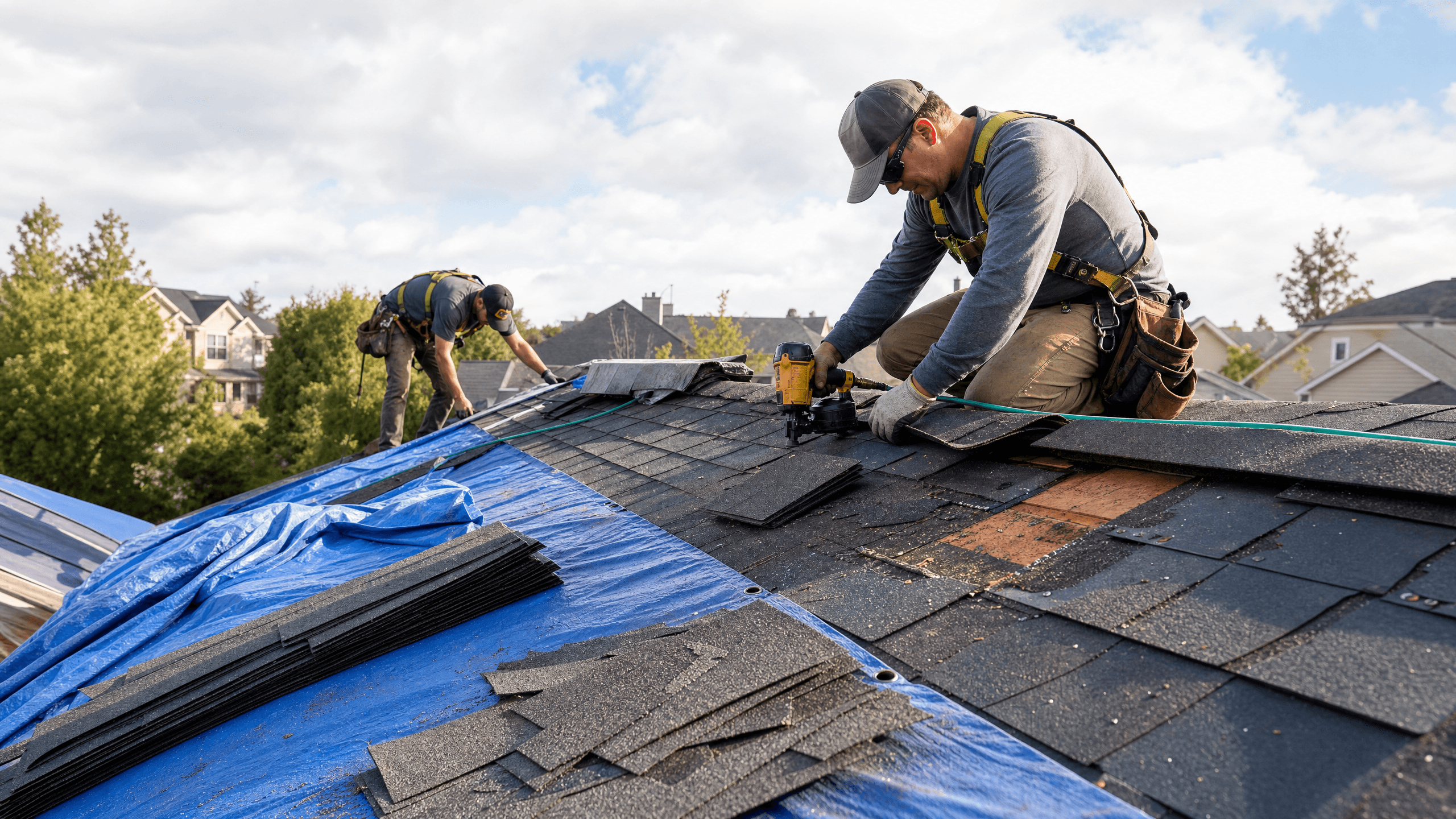
When you do file, the documentation decides the outcome. Carriers approve, partially approve, or deny claims largely on how the scope is written and supported. Quest Exteriors handles documentation as part of every storm-damage estimate — see our full insurance claims help page for the complete process. Your inspection photos and written report become the basis for the carrier's scope of loss, and well-documented claims close cleanly while poorly-documented claims face supplements, denials, and frustration.
Common mistakes homeowners make
After fifteen years of seeing this from the insurance side and another fifteen years of seeing it from the contractor side, a few mistakes show up consistently:
- Calling the insurance carrier first. A claim opened with weak documentation often closes with a smaller settlement than you deserve. Document first, file second.
- Trusting door-to-door storm chasers. Out-of-state contractors descend on storm-affected areas after every major event. Many won't be there to honor warranties or follow up on supplements. Work with year-round local contractors.
- Waiting too long. "I'll deal with it after summer" is how minor damage becomes a major leak. File and repair before the next storm season.
- Letting a contractor pressure you into a claim. If a roofer is hard-selling you into filing when you're not sure, that's a red flag. A second opinion costs nothing.
- Skipping the gutters, siding, and HVAC documentation. A complete scope often pays for itself many times over compared to a roof-only scope.
Manufacturer resources
The shingle brands we install publish their own homeowner guidance on storm and hail damage. They're worth a read before your inspection so you know what the warranty does and doesn't cover:
- GAF — homeowner resources on shingle performance, impact resistance, and the warranty terms tied to storm claims.
- Owens Corning Roofing — product pages and homeowner guides covering hail-rated shingle lines and what their limited warranties cover.
- CertainTeed — installation standards and warranty documentation for their architectural and impact-resistant shingle lines.
Next steps if you suspect hail damage
If you've had a recent severe weather event in your area, the practical next step is simple: schedule a free, no-obligation inspection. Quest Exteriors documents storm damage across our 23-state service area, and we'll tell you honestly whether you have a claim-worthy event or whether your roof came through fine.
Either answer is valuable. Either way, you'll know — and you'll have a written report you can keep for your records, file with your carrier, or set aside until the next event tests your roof.