
How to File a Roofing Insurance Claim: Step-by-Step Guide
Filing a roofing insurance claim is one of those tasks that feels harder than it is — until you've done it wrong once. The carrier has a process. The adjuster has a process. The contractor has a process. If those three processes don't line up in the right order, you end up with an underpaid scope, a denied claim, or a settlement that took six months when it should have taken six weeks.
Here is the step-by-step order to file a roofing insurance claim correctly, what to do at each stage, and the mistakes that cost homeowners money. The guidance comes from Quest Exteriors owner Cody Wood's 16+ years inside insurance carriers — including catastrophe and SIU adjusting through major hail and hurricane events — plus the contractor-side view that completes the picture.
When to file — and when to wait
The right time to file is after you have a professional inspection report documenting actual damage, and before policy deadlines start cutting into your recovery. Most policies in our service area require notice within one to two years of the date of loss, but the practical recommendation is to file within 30-60 days of a documented storm event. Late filings face higher denial rates because carriers can argue damage worsened during the delay.
Don't file before you have documentation. A claim opened with vague "I think I have damage" descriptions and no inspection report often closes with a smaller settlement than a claim opened with photos, slope diagrams, and a written scope. Document first, file second.
Step 1 — Document the damage independently
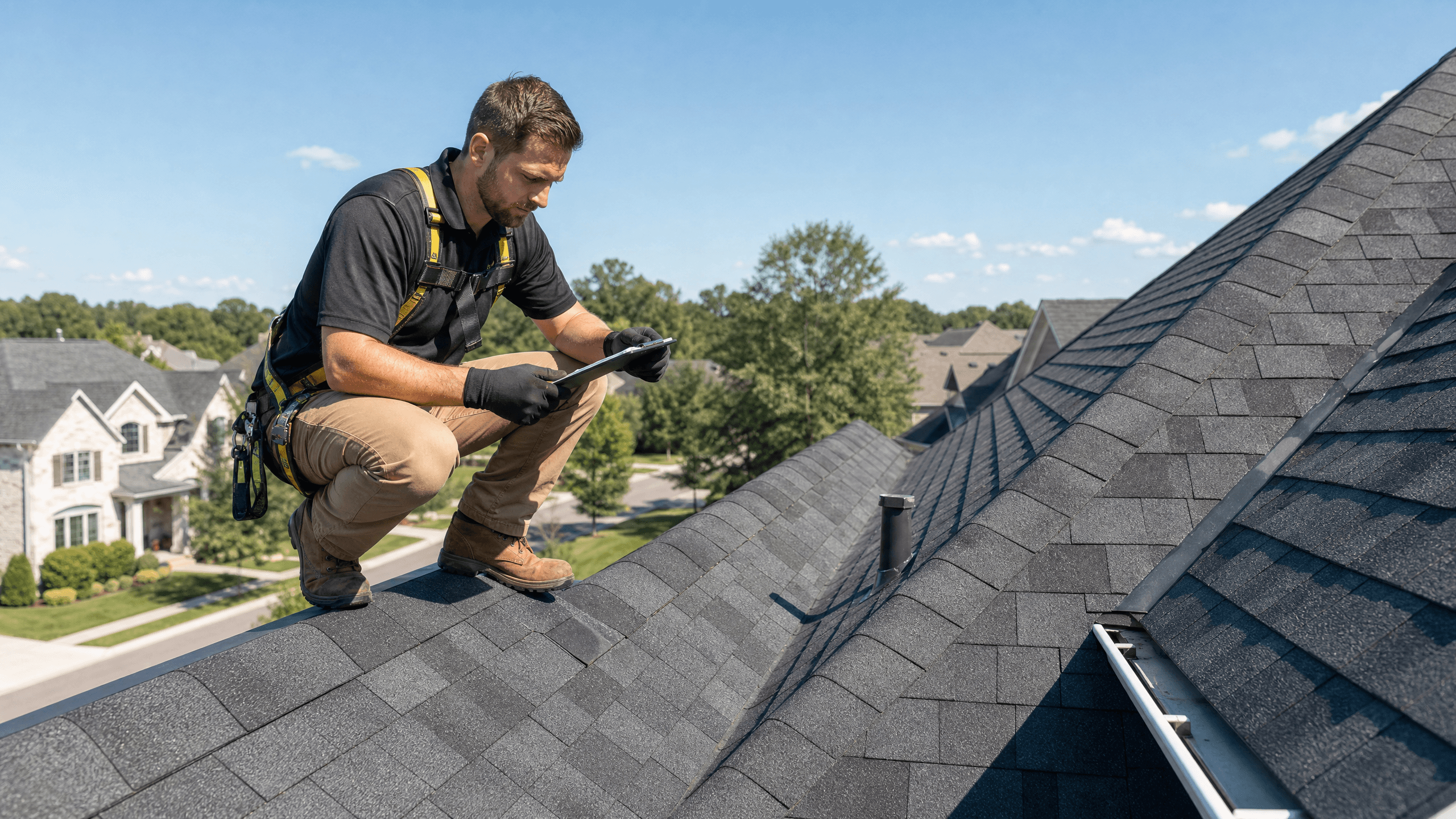
Before any call to the carrier, get a professional inspection. A proper inspection includes:
- Full perimeter walk — gutters, downspouts, siding, HVAC condenser fins, fences, and any visible ground-level damage
- Roof access — each slope walked and photographed individually with reference markers showing impact density
- Soft-metal photos — vent caps, plumbing flashings, chimney flashings (impacts here are strong evidence of hail severity)
- Interior attic check — water staining, daylight at penetrations, condition of underlayment from below
- Written report — slope diagrams, photo log, damage summary, and a recommendation on whether the event is claim-worthy
Quest Exteriors provides this inspection at no cost. The written report is yours to keep regardless of whether you file. If the damage doesn't justify a claim, we'll tell you that — a denied claim on your record is worse than no claim at all.
Step 2 — Contact your insurance carrier
Call the claims line on your declarations page (not your agent — agents don't open claims). Provide:
- Date of loss (the storm event date, not today's date)
- Brief description of damage ("hail damage to roof and gutters, documented by professional inspection")
- Property address and policy number
- Your preferred contact method and best windows for the adjuster meeting
You'll receive a claim number. Don't speculate on cause, dollar amount, or repair scope at this stage. The carrier writes the scope, not you. Your job is to make sure they have the information needed to write it accurately.
Step 3 — The adjuster meeting
The carrier schedules an adjuster to walk the property — usually within 7-14 days of claim opening. Quest Exteriors meets the adjuster on-site for every Quest customer, free of charge. This single change in process is the highest-leverage thing a homeowner can do for claim outcome. The adjuster sees damage they might otherwise miss. The scope reflects the property accurately. Supplements that would have been needed later are caught up front.
What we bring to the meeting:
- Our inspection report with slope-by-slope photos and reference markers
- Documented soft-metal damage and HVAC fin damage (often missed on roof-only scopes)
- Code-required upgrade list for your jurisdiction (drip edge, ice-and-water shield, ventilation)
- Matching analysis showing whether partial replacement is feasible or full-roof replacement is required
- Manufacturer specifications for the systems we'd install if the claim is approved
Step 4 — Settlement, supplements, and timeline
After the adjuster's walk, you'll receive a Scope of Loss with line-item damage and an estimated repair cost. On RCV policies, the carrier pays the ACV (depreciated value) up front and holds depreciation recovery until the work completes. Most carrier scopes in our service area land within 5-15 business days of the adjuster meeting.
If the scope is incomplete — missing legitimate damage, undersized line items, or missing code-required upgrades — Quest Exteriors files a supplement with the carrier. Supplements are normal, expected, and handled in writing with supporting documentation. A typical supplement adds 10-30% to the initial scope. We don't charge for supplement work; it's part of how the claim gets settled fairly.
From claim opening to depreciation recovery, most residential roof claims complete in 4-8 weeks with proper documentation. Commercial claims and complex residential losses (multi-building, multi-trade scope) can run 8-16 weeks.
What Quest does differently
Most contractors hand you an estimate and tell you to call the insurance company. We don't operate that way.
- On-site adjuster meetings — every Quest customer, every claim, no exceptions
- Documentation built to carrier expectations — Cody Wood spent 16+ years on the carrier side and our scope packages are written to the format carriers actually approve
- Supplement handling — we file, we document, we follow up — at no cost to you
- Competitive Bid Program — when carriers and contractors disagree on scope, our Competitive Bid Program provides an alternative to appraisal that often resolves the disagreement without formal appraisal proceedings
- Honest "don't file" recommendations — if your damage doesn't justify a claim, we say so. A denied claim is worse than no claim.
More on our full claim-handling approach lives at Insurance Claims Help. If you're working through a current or upcoming claim, book a free inspection and we'll walk you through the next step for your specific situation.