
How Long Does a Roof Last? Lifespan by Material
"How long will this roof last?" is the single most common question we get on residential inspections. The honest answer is more useful than the warranty number on the box. Real-world roof lifespan depends on the material, the installation quality, the ventilation behind the deck, and the climate the roof actually has to survive — and the difference between a roof that hits its warranty number and a roof that fails ten years short is rarely about the material itself.
Below: realistic roof lifespan by material, the factors that cut years off any roof regardless of product, the signs your current roof is nearing end of life, and what Quest Exteriors' QuestShield maintenance program does to stretch service life on existing systems.
Asphalt shingles
Asphalt shingles dominate the residential market and come in three tiers, each with a different real-world lifespan:
- Three-tab shingles (the budget tier) — 15-20 years in moderate climates, 12-15 in harsh climates. Increasingly rare on new installs as manufacturers shift production toward architectural lines.
- Architectural (laminated) shingles — 20-30 years in moderate climates, 18-25 in harsh climates. The workhorse of modern residential roofing.
- Premium / lifetime-rated architectural shingles — 25-30 years realistic, 30+ in moderate climates with proper ventilation. Manufacturer "lifetime" warranties have specific conditions attached and rarely represent actual expected service life.
Class 4 impact-rated asphalt shingles run the same lifespan as the equivalent non-impact lines, with the added benefit of better hail performance and insurance premium discounts in hail-corridor markets.
Metal roofing
Metal roofing dramatically outlasts asphalt across nearly every climate. Realistic ranges:
- Standing-seam steel (24-gauge painted) — 40-50 years, longer with periodic recoating of the paint system
- Standing-seam aluminum — 50-60 years, particularly strong in coastal salt-air environments where steel corrodes faster
- Stone-coated steel — 30-50 years, with periodic granule loss as the visible aging signal
- Standing-seam copper — 70-100+ years, the longest-lived practical residential roofing option
- Corrugated metal panels (lower grade) — 25-40 years depending on gauge and finish quality
The lifespan-per-dollar math typically favors metal on 15+ year ownership horizons. Our deeper comparison lives at Metal Roofing vs. Asphalt Shingles.
Tile, slate, and specialty residential systems
Premium tile and slate roofs are the longest-lived practical residential options:
- Concrete tile — 50-70 years; the underlayment may need replacement at 25-30 years even when tiles remain serviceable
- Clay tile — 75-100+ years on the tile itself, with similar underlayment service intervals
- Natural slate — 75-150 years on the slate itself; underlayment, fasteners, and flashings limit practical lifespan
- Cedar shake — 25-40 years depending on climate and maintenance; significantly shorter in humid or wildfire-prone regions and increasingly restricted by insurance carriers and local codes
Tile and slate carry higher upfront costs and require structural framing capable of supporting the dead load — items that add cost on retrofit projects but pay back over the multi-generational service life.
Commercial roofing systems
Commercial low-slope roofs run different lifespan profiles than residential:
- TPO (thermoplastic polyolefin) — 20-30 years with proper maintenance and minimal ponding water
- EPDM (rubber membrane) — 25-30 years; one of the most durable membrane options but loses solar reflectivity over time
- PVC — 20-30 years; premium chemical and grease resistance for restaurants and industrial facilities
- Modified bitumen — 20-25 years; multi-ply asphalt system common on re-roofs and retrofits
- Built-up roofing (BUR) — 20-30 years; older technology, rarely specified for new construction
- Standing-seam metal commercial — 40-60 years on buildings with sufficient slope (2:12+)
Active maintenance matters dramatically more on commercial roofs than residential because failures are larger and harder to detect from inside the building.
What actually shortens roof lifespan
The product warranty on the box assumes proper installation and proper conditions. In the field, a few factors consistently knock years off real-world lifespan:
- Poor attic ventilation — trapped heat and moisture accelerate shingle aging from underneath; can cut asphalt life by 5-10 years
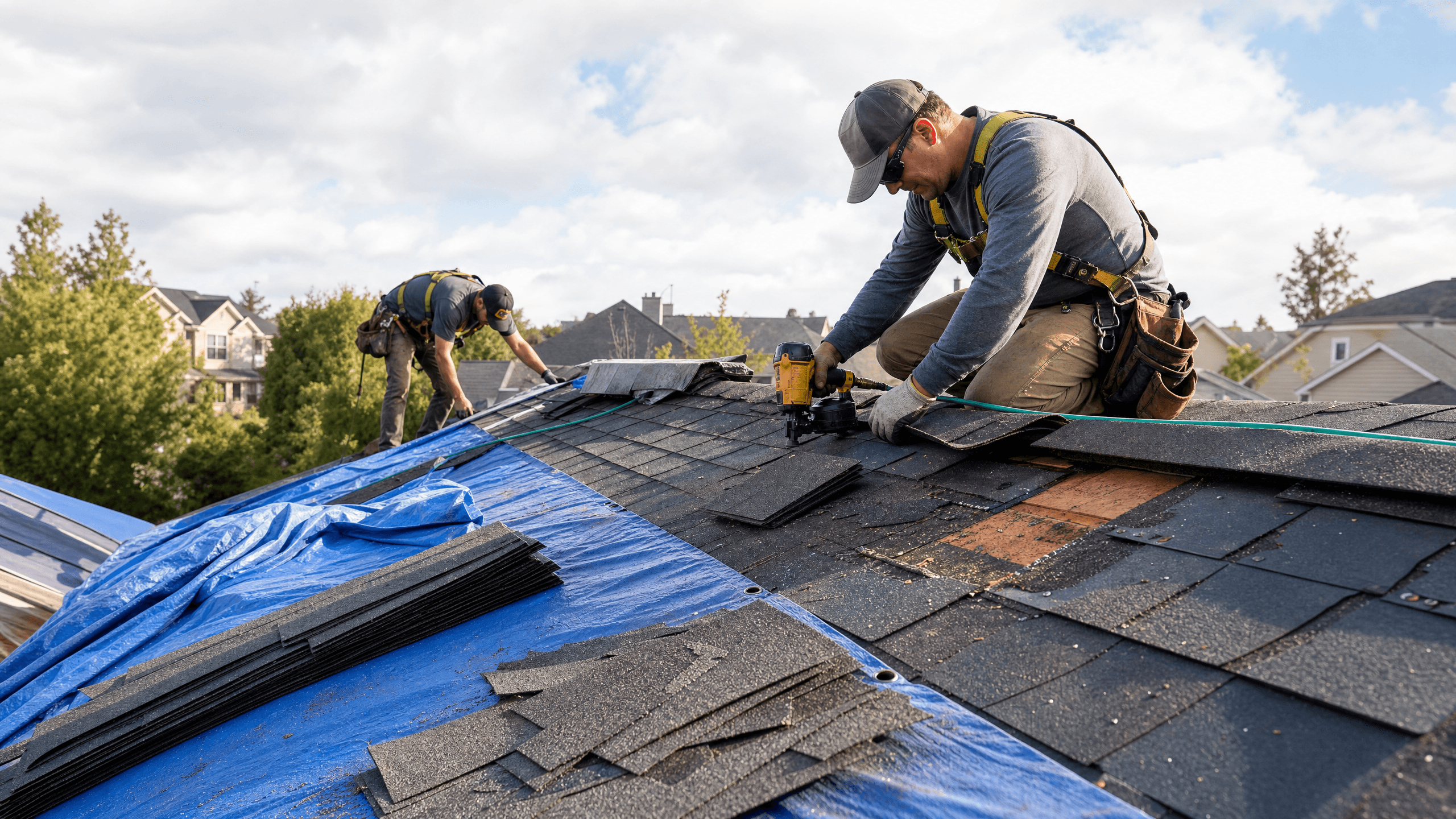
- Bad installation — wrong fastener type, wrong nail count, missing ice-and-water shield, poorly detailed flashings
- Storm exposure — repeated hail, wind, and UV events compound damage that may not require a claim individually but shortens total service life
- Tree contact — branches abrading the roof surface, debris accumulation in valleys, falling-limb impacts
- Inadequate intake / exhaust ventilation balance — soffit-to-ridge ventilation needs to be sized correctly for the attic volume
- Roof penetration neglect — failing pipe boots, deteriorating chimney flashings, and worn-out vent caps create leak paths that compromise the entire roof
- Walking on the roof — repeated foot traffic damages shingles and metal panels alike
Signs your roof is at end of life
A roof rarely fails dramatically. The signals accumulate over the last few years of life:
- Granule accumulation in gutters and downspout splash blocks
- Curling, cupping, or cracking shingle tabs visible from the ground
- Bald patches where granules are missing across multiple slopes
- Sagging or uneven rooflines (a structural concern, not just cosmetic)
- Interior signs — water staining on ceilings, peeling paint near penetrations, daylight visible in the attic at penetration points
- Algae or moss growth on north-facing slopes (often a ventilation symptom, not just cosmetic)
- Daylight visible in the attic at the ridge line or around vent stacks
When multiple signs appear together, plan replacement before the next severe weather season. Our Roof Replacement Cost in 2026 guide walks through what to budget.
Manufacturer resources
Every lifespan range above assumes the product is installed and maintained the way its manufacturer specifies — so the warranty documentation is worth reading. For residential shingles:
- Owens Corning Roofing — shingle product lines and the conditions attached to their lifetime limited warranties.
- GAF — shingle systems and certified-installer warranty programs.
- CertainTeed — shingle specifications and installation requirements that affect rated lifespan.
For commercial low-slope membranes:
- Carlisle SynTec — TPO, EPDM, and PVC systems with NDL warranty options.
- Johns Manville — commercial membranes, insulation, and warranty documentation.
- Mule-Hide — single-ply and low-slope systems with maintenance and warranty guidance.
How Quest's QuestShield program extends roof life
QuestShield is Quest Exteriors' proactive maintenance program — scheduled inspections, minor-repair handling, and documentation that keeps your roof at its full warranty potential. Members get:
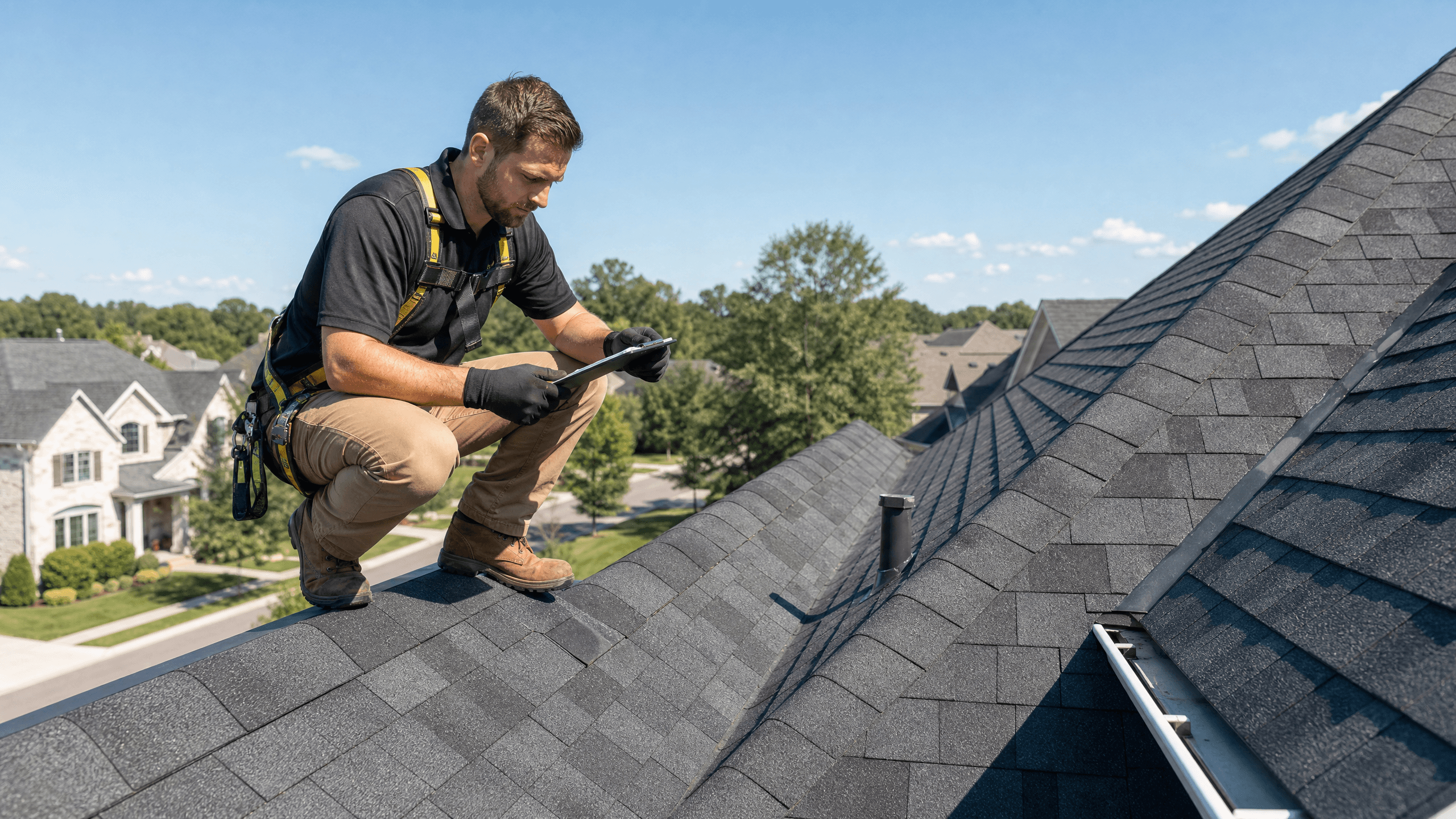
- Annual or semi-annual scheduled inspections with photo documentation
- Storm-response priority scheduling after major weather events
- Minor repair handling (flashings, sealants, vent boots, fastener replacement) at preferred pricing
- Maintenance records suitable for warranty and insurance documentation
- Honest "how much life is left" assessments so replacement planning isn't a surprise
Most residential roofs that fail prematurely fail because nobody looked at them for years. A scheduled inspection catches the failing flashing before it becomes the interior leak. Contact Quest Exteriors to schedule an inspection or learn whether QuestShield is available in your area.