Commercial vs. Residential Roofing: Key Differences Every Property Owner Should Understand
If you own both a home and a commercial property, you've probably noticed that the roofing conversation for each one is completely different. Different materials. Different costs. Different lifespans. Different inspection cadences. Different insurance considerations. Different contractors, usually.
Here's what actually differs between commercial vs. residential roofing — materials, slope, cost, maintenance, warranty, and contractor selection — and why it matters before you hire anyone or plan a maintenance budget. Quest Exteriors does both at scale across 23 states, so this is the end-to-end view rather than one side of the line.
Slope: the fundamental difference
The single biggest difference between commercial and residential roofing is slope. Residential roofs are almost always steep-slope systems — typically 4:12 pitch or steeper, where water moves quickly off the roof by gravity. Commercial roofs are usually low-slope or flat — typically 1:12 to 4:12 — where water doesn't move quickly and the roof system has to actively manage drainage, ponding, and seam integrity.
That one structural difference cascades into nearly everything else about how the two systems are built, maintained, and replaced.
Material differences
Commercial roofing materials
Low-slope commercial roofs typically use one of these system types:
- TPO (thermoplastic polyolefin) — heat-welded white membrane, dominant choice for new commercial roofs in warm-climate markets for reflectivity and seam reliability
- Modified bitumen — multi-ply asphalt-based system with heat-welded or self-adhered application; common on older buildings and re-roofs
- EPDM (ethylene propylene diene monomer) — black rubber membrane; still common on existing commercial roofs, less common on new installs in hot climates
- PVC (polyvinyl chloride) — premium chemical- and grease-resistant membrane, common on restaurants and industrial facilities
- Built-up roofing (BUR) — older multi-ply asphalt and gravel system; still seen on existing buildings, rarely specified for new construction
- Standing-seam metal — increasingly used on commercial buildings with sufficient slope (typically 2:12 or steeper)
Residential roofing materials
Steep-slope residential roofs are a different conversation:
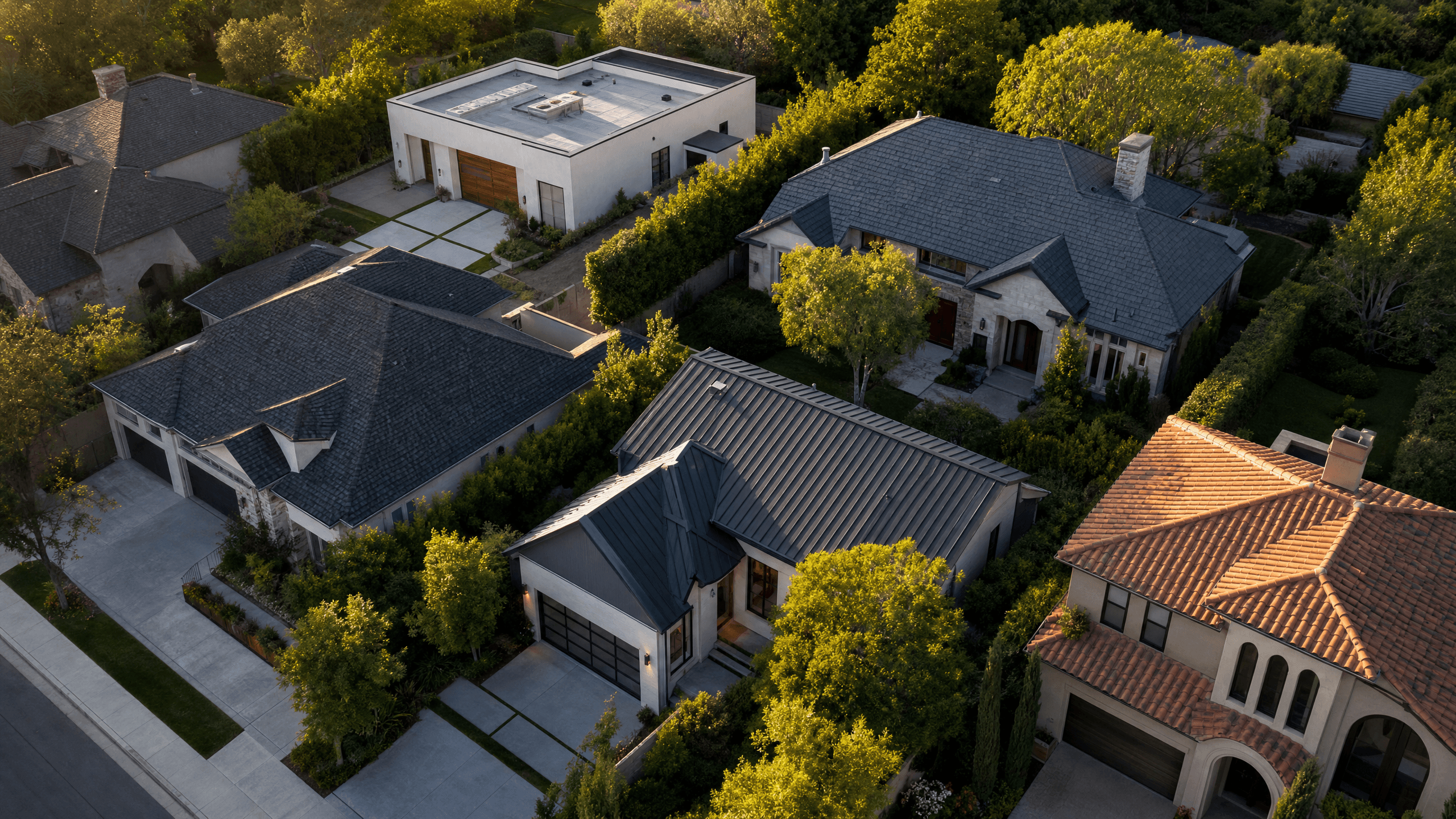
- Asphalt shingles (architectural) — the value workhorse, 70%+ of the US residential market
- Class 4 impact-resistant asphalt shingles — for hail-prone markets, often insurance-discount eligible
- Standing-seam metal — premium residential option, dramatically longer lifespan than asphalt
- Stone-coated steel — metal performance with a more traditional appearance
- Clay or concrete tile — common on Mediterranean and Spanish-style architecture, particularly across the Southwest and Sun Belt
- Slate — rare in most US markets, occasionally seen on historic homes and high-end custom builds
- Wood shake — increasingly rare due to insurance and fire-code concerns
Quest Exteriors installs all of the above on a regular basis, but the product selection conversation for a 30-square asphalt residential reroof and a 50,000-square-foot TPO commercial replacement are completely different exercises.
Cost factors and lifecycle
Direct cost comparison between commercial and residential roofing is misleading because the units, materials, and labor profiles are different. But the directional patterns are worth understanding:
Residential cost factors
Residential roofing costs are typically driven by square footage, pitch, layer count (one-layer or multi-layer tear-off), material choice, and accessories (drip edge, ice-and-water shield, ridge ventilation). A typical residential roof replacement runs $8,000-$25,000 for asphalt and significantly more for premium materials. Insurance claims often cover a meaningful portion of replacement cost when storm damage qualifies.
Commercial cost factors
Commercial roofing costs depend on square footage, system type, insulation thickness, mechanical penetrations, perimeter detailing, and access logistics. A 25,000-square-foot warehouse TPO replacement might run $250,000-$500,000+ depending on insulation and detail complexity. Commercial roofs typically have longer warranty periods (15-30 years on the membrane) but require more active maintenance to honor the warranty.
Lifecycle
Residential asphalt shingle roofs typically last 20-30 years in moderate climates and 15-25 in harsher ones. Commercial TPO and modified bitumen systems run 20-30 years with proper maintenance. The maintenance discipline matters dramatically more on commercial roofs because failures are typically larger and harder to detect from inside the building.
Maintenance differences
Residential roofs are usually maintained reactively — most homeowners don't think about the roof until something fails or a storm produces visible damage. That's not optimal practice, but it's the reality of most residential markets.
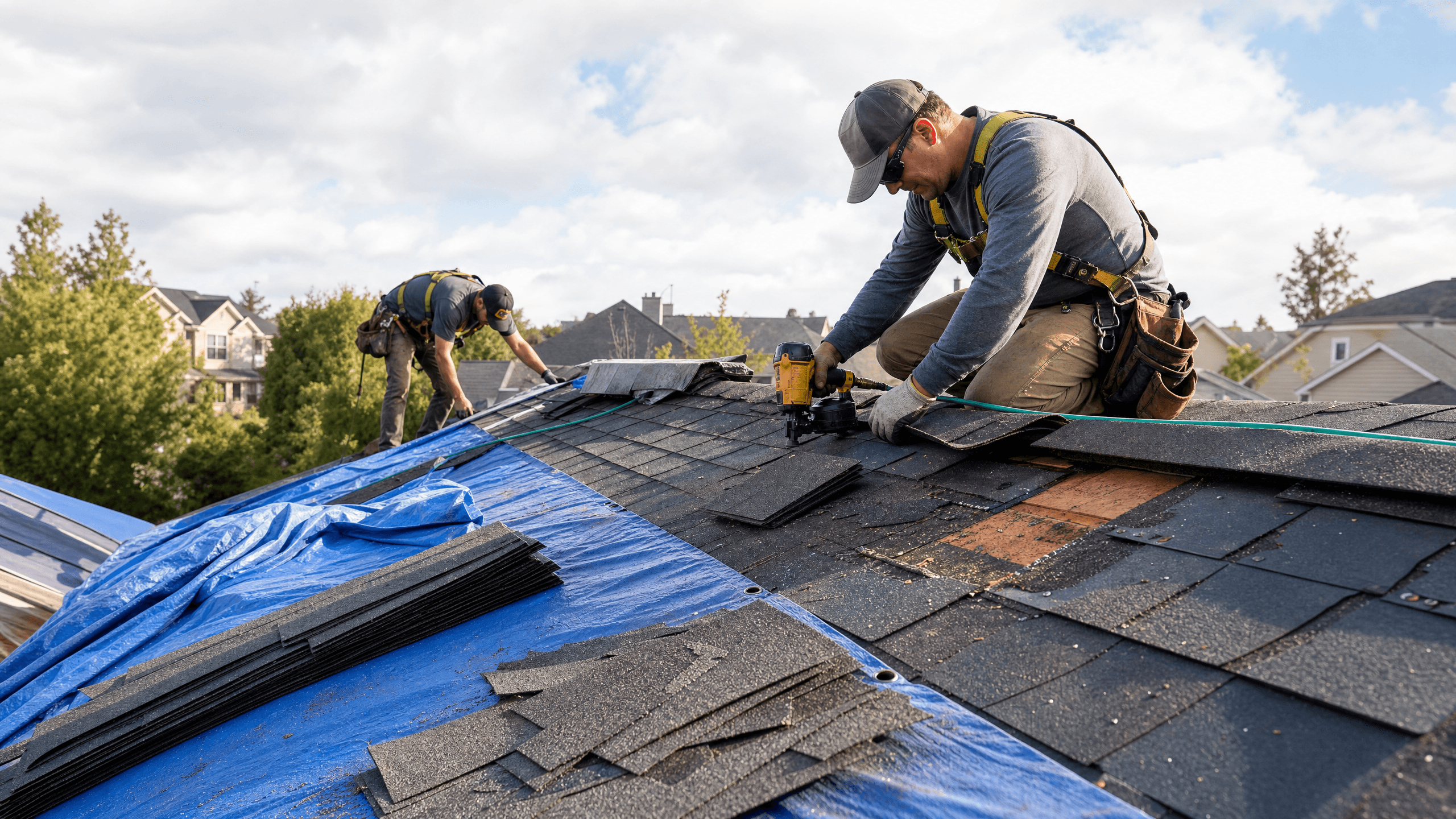
Commercial roofs require proactive maintenance to honor warranty terms and prevent the failures that produce costly business interruptions. A typical commercial maintenance program includes:
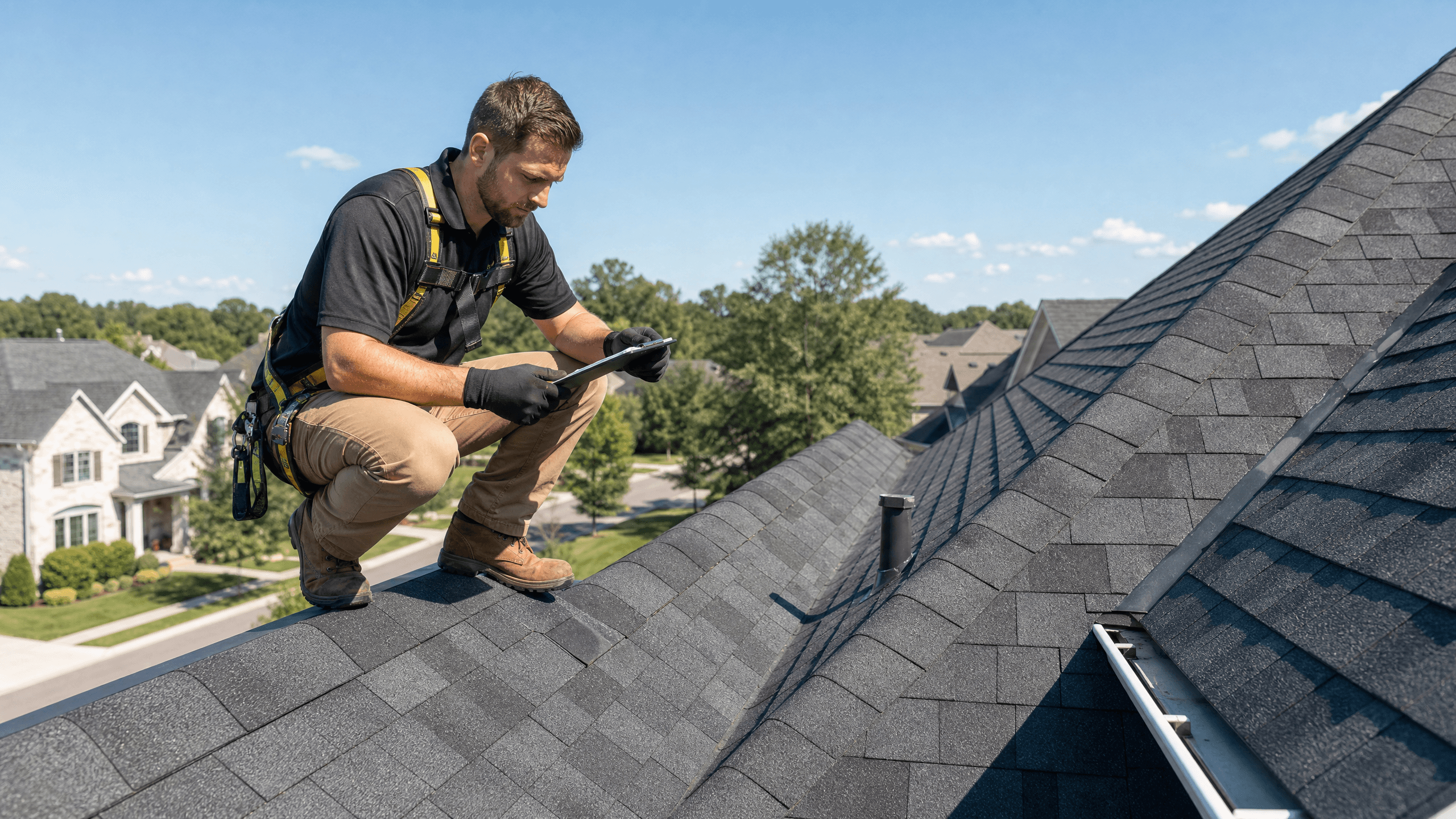
- Annual or semi-annual scheduled inspections with photo documentation
- Drainage and gutter system checks (especially before rainy season)
- Seam and flashing reviews at all penetrations and perimeter details
- Membrane integrity checks for ponding, blistering, or coating breakdown
- HVAC and rooftop equipment isolation and curb sealing
- Documented records suitable for warranty and audit purposes
Quest Exteriors offers maintenance programs for commercial properties across our 23-state service area. For multifamily and retail centers, the proactive approach pays back many times over compared to deferred maintenance and emergency repair costs.
Insurance and warranty considerations
Both sides have warranty coverage, but the structure differs:
Residential warranties
Residential roof warranties typically come in two parts: manufacturer material warranty (15-50 years depending on product line) and contractor workmanship warranty (typically 5-25 years from a quality contractor). Manufacturer warranties cover material defects; workmanship warranties cover installation quality. Both matter, both have specific exclusions, and both deserve careful reading at the time of purchase.
Commercial warranties
Commercial roof warranties are structured around the system rather than the materials alone. NDL (No Dollar Limit) warranties from major manufacturers cover full repair or replacement during the warranty period if the system fails under covered conditions. These warranties typically require certified installation by approved contractors and ongoing maintenance documentation — which is part of why proactive maintenance is so important on commercial roofs.
Insurance differences
Storm damage insurance claims are common on both residential and commercial roofs, but the dynamics differ. Residential claims typically process through standard homeowners' policies on a relatively predictable timeline. Commercial claims involve more parties (property managers, ownership groups, lenders), longer timelines, and more complex scopes. Both require careful documentation; the documentation requirements are stricter on the commercial side because the dollar amounts are larger.
Choosing a contractor: the often-overlooked differences
Many residential roofers don't do commercial work. Many commercial roofers don't do residential work. The skill sets, equipment, and crew structures are genuinely different — which means most roofing companies specialize in one side or the other.
For residential work, the right contractor profile is:
- Manufacturer-certified installer for the product lines they install
- Licensed in your state and locally established
- skilled trade crews rather than subcontracted day labor
- Insurance-claim documentation experience (for storm work)
- Clear written warranty on workmanship
- Local references and visible recent project work
For commercial work, add:
- System-specific certification (NDL warranty eligibility from the manufacturer)
- Experience with the membrane type your building uses (TPO ≠ modified bitumen ≠ EPDM)
- Documented maintenance program capability
- Comfort with tenant-coordination logistics, after-hours work, and lift/scaffold operations
- Insurance and bonding suitable for commercial property work
Quest Exteriors handles both sides, with separate crew teams trained for residential pitched-roof work and commercial low-slope membrane installation. The same project leadership and insurance expertise applies to both, but the field execution is different — as it should be.
Common questions from property owners with both
If you own both a home and a commercial property, the question often becomes whether to use the same contractor for both. The answer depends on whether the contractor actually does both well.
A residential-focused contractor doing commercial work often underestimates scope, lacks NDL warranty certification, and produces shorter-lived results. A commercial-focused contractor doing residential work often overengineers the scope and overcharges. The right answer is finding a contractor with documented experience on both — and asking specifically about the crew, the products, and the warranty terms for each type.
To see examples of both commercial and residential Quest Exteriors work, browse our project gallery. Or contact us to discuss your specific project — whether it's a single-family roof replacement, a multifamily exterior program across a portfolio, or a TPO replacement on a 40,000-square-foot warehouse.
Manufacturer resources
Because the two sides use entirely different products, they come with different manufacturers — and different warranty rules. For residential shingle systems:
- Owens Corning Roofing — shingle product lines, ventilation guidance, and limited warranty terms.
- GAF — residential shingle systems plus their certified-contractor warranty programs.
- CertainTeed — shingle specifications and installation standards.
For commercial low-slope membrane systems:
- Carlisle SynTec — TPO, EPDM, and PVC single-ply systems and their NDL warranty documentation.
- Versico — single-ply membrane systems and commercial warranty programs.
- Johns Manville — commercial roofing membranes, insulation, and system warranties.
- Duro-Last — prefabricated PVC membrane systems built for low-slope commercial roofs.
Final thoughts
Commercial and residential roofing share a name and not much else. Different materials, different slopes, different cost structures, different warranty paradigms, different maintenance disciplines, often different contractors. Property owners who treat both as the same conversation usually end up with at least one decision they regret.
If you have specific questions about a project — whether it's residential storm damage, a commercial roof at end of useful life, or anything in between — Quest Exteriors offers free on-site inspections across our 23-state service area. We'll walk the property, document conditions, and give you a written estimate you can compare directly against any other bid.